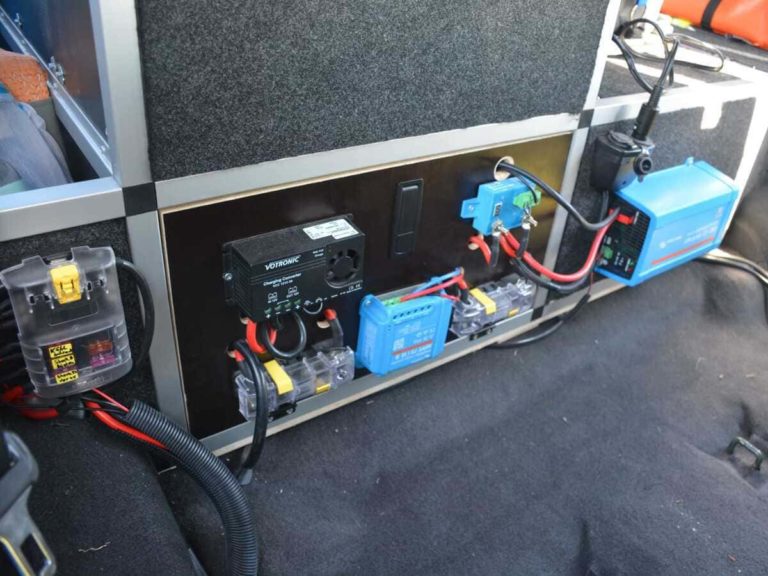
Charge by Generator


Charge by Generator
Make the most of your driving time by recharging the leisure battery in your camper van or motorhome. Here you’ll find DC-DC chargers, split charge relays and auxiliary battery kits for power on the road. The right solution depends on your alternator, battery type and required charging current. Depending on your setup, a device combining alternator and solar charging may also be an option.
How do you charge your leisure battery while driving?
When the engine is running, the alternator generates electrical power for your vehicle. With a suitable connection to the leisure battery, you can also use this energy to power your living area. The aim is to charge the battery reliably without overloading the alternator or allowing your habitation appliances to drain the starter battery while parked.
You don’t need to know all the technical terms before choosing. Start with three questions: what type of alternator does your vehicle have, which leisure battery do you want to charge, and how much energy do you need to replenish during your usual driving time?
DC-DC chargers and battery-to-battery chargers: controlled battery charging
DC-DC chargers, battery-to-battery chargers and charging boosters are names used for devices that convert the vehicle’s supply voltage into a suitable charging voltage for your leisure battery. They control the charging process and limit the charging current according to their specifications and settings.
A suitable DC-DC charger is particularly useful if your vehicle has a smart alternator, you want to charge a LiFePO4 battery, or your vehicle and leisure battery systems operate at different voltages. Check each device’s supported battery types, input voltage range and charging activation options.
Split charge relays: a simple connection for suitable systems
A split charge relay connects the starter and leisure batteries under defined conditions and disconnects them when the connection is no longer needed. Depending on the model, it may be controlled by a vehicle signal or by the measured voltage. When the relay is open, appliances in the living area cannot draw power from the starter battery through this connection.
Unlike a DC-DC charger, a split charge relay does not provide its own charging profile or actively limit the charging current. It is therefore mainly an option for systems with a conventional alternator and batteries suitable for this arrangement. The charging voltage, potential currents and switching thresholds must suit the entire setup.
An important distinction when comparing products: a relay’s current rating indicates how much current it can handle, not a regulated charging output. A relay with a high amp rating is therefore not a substitute for a DC-DC charger with an equivalent charging current.
Auxiliary battery kits: when you also need the connection hardware
If you are adding a second battery, an auxiliary battery kit can make it easier to gather the components you need. Depending on the package, it may include cables, fuses and other connection hardware alongside the main device.
The charging technology remains the deciding factor: a relay-based kit has different requirements from a system using a DC-DC charger. Also check what is included, the cable lengths and the specified cable cross-sections. The term “auxiliary battery kit” does not automatically mean that a battery is included or that the kit fits every vehicle without modification.
Conventional or smart alternator: Which does your vehicle have?
A conventional alternator generally provides a relatively steady charging voltage while the engine is running. With a smart alternator, the vehicle’s management system can vary the voltage significantly and reduce it for periods of time. In these conditions, a simple split charge relay connection may not provide the leisure battery charging you need.
These vehicles require a charging solution designed for this behaviour. Within their operating range, suitable DC-DC chargers can maintain the required charging voltage despite a varying input voltage. Check your vehicle documentation or ask your workshop to establish whether your vehicle has a smart alternator. Model year and emissions standard alone are not enough to identify it reliably.
LiFePO4, AGM or gel: Charging must suit the battery
Choose a device with a charging profile suitable for your leisure battery, or with charging parameters that can be adjusted accordingly. Alongside battery voltage, check the permitted charging voltages and charging current.
Current limiting deserves particular attention with LiFePO4 batteries: their low internal resistance means they can draw high currents when directly connected. Correctly sized and configured charging equipment helps keep the battery and alternator within their permitted operating limits. The battery management system does not replace this charging control.
12 V or 24 V: Choose the correct input and output
The device must support both your vehicle’s electrical system voltage and your leisure battery voltage. A 12 V vehicle with a 12 V leisure battery requires a different configuration from a 24 V vehicle with a 12 V leisure battery. Always check the input and output voltage specifications.
A split charge relay does not convert voltage. A relay approved for 12 V and 24 V systems must therefore not be used to connect a 24 V starter battery directly to a 12 V leisure battery.
How much charging current do you actually need?
The right charging current depends on your battery, energy consumption and usual driving time. A more powerful DC-DC charger can replenish more energy in a short journey, provided the battery, alternator and installation can support it.
As a simple guide, if 30 A actually flows into the battery for one hour, this adds approximately 30 Ah of charge. In everyday use, the figure may be lower because of appliances running at the same time, reduced charging output at high temperatures or the battery’s charging stage. The charger’s rated output is therefore not necessarily available throughout the entire journey.
Do not choose the charging current solely based on the alternator’s amp rating. The vehicle itself uses part of its output, and the power available also depends on factors such as engine speed and temperature. A DC-DC charger’s input current can also exceed its output current, particularly when it needs to increase the voltage.
Alternator and solar charging: separate devices or a combination unit?
If you want to charge your leisure battery both while driving and from solar panels, you have two options: a separate DC-DC charger and solar charge controller, or a combination unit with an integrated MPPT solar charge controller.
A combination unit brings both functions together and can save space and simplify wiring. Separate devices can be selected and upgraded independently. The better option depends on your system and future conversion plans.
When choosing a combination unit, check the maximum permitted solar open-circuit voltage, input current and solar array power as well as its alternator charging specifications. Also check how it uses the two energy sources: whether they can charge simultaneously, and the combined charging output available, varies by model.
Charging activation and installation: What else should you consider?
The DC-DC charger needs to detect or receive a signal telling it when charging is permitted. Depending on the device and vehicle, this may involve automatic engine-running detection or a suitable control signal such as D+. Before buying, check which method is appropriate for your vehicle and whether additional accessories are required.
Also consider the mounting location, ventilation requirements and cable routes between the starter battery, charger and leisure battery. Cable cross-sections and fuses must suit the current, cable length and installation requirements. A more powerful device cannot automatically be used with existing wiring.
If your vehicle already has a split charge relay, an integrated electrical distribution and charging unit or other charging equipment, the new solution must be integrated accordingly. Any remaining direct connection between the batteries must not unintentionally bypass the controlled charging system.
The information you need to choose the right product
- Vehicle and alternator: What is the vehicle’s system voltage, and does it have a conventional or smart alternator?
- Leisure battery: What are its voltage, battery chemistry and permitted charging current?
- Travel routine: How much energy do you want to replenish during your usual driving time?
- Other charging sources: Do you already have a solar charge controller, or would you like to combine solar and alternator charging in one device?
- System integration: What charging activation method, wiring, fuses and existing charging equipment need to be taken into account?
If you are still unsure about your energy needs, our Autarkie-Designer Pro helps you consider appliance use, driving distances and time spent parked up together. This makes it easier to assess how much charging while driving should contribute to your overall power supply.