Heaters


Heaters
Warmth for your camper van – even with the engine switched off. Here you will find parking heaters for different conversion layouts: air heaters that warm the interior directly and hydronic heaters for a liquid-based heating circuit. Choose according to your heating needs, the functions you want and the installation options in your vehicle.
Which parking heater suits your camper van?
Your first decision concerns the layout of your heating system: do you want to heat the living space directly with warm air or distribute heat through a liquid circuit? An air heater can do more than provide space heating: a Warmduscher-Kit makes it easy to integrate hot water too. With suitable additional components, you can even add a heated towel rail or a warm floor in the seating area.
A hydronic heater is particularly worth considering if a liquid heating circuit is to form the basis of your heating system – for example, with several heat exchangers supplied by that circuit or a planned connection for engine preheating. The deciding factor is therefore not simply whether you also want hot water, but how heat will be distributed around the vehicle and which systems you want to connect.
For direct space heating, an air heater is usually the starting point. If you are planning a liquid-based heating system, consider a hydronic heater. Both approaches require suitable components for installation, supply connections and heat distribution alongside the heater itself.
Air heaters: warming the interior directly
An air heater such as the Autoterm Air heats air and distributes it around the vehicle through warm-air ducts and outlets. The heated air and combustion exhaust gases remain separate. Heat reaches the living space directly, without first having to warm up a liquid circuit.
This makes an air heater particularly appealing if you want to heat your camper van with a relatively straightforward system. The air distribution can be planned around your layout, with outlets serving the living area and sleeping space, for example.
If space heating is your main requirement, you will find suitable heaters and kits under air heaters. Plan the duct routing early: long runs, numerous bends and unsuitable duct sizes can restrict airflow.
Hydronic heaters: distributing heat through a liquid circuit
A hydronic heater such as the Autoterm Flow heats a suitable heat-transfer fluid. This circulates through a heating circuit and releases heat through connected components. Water-to-air heat exchangers, for example, can be used to heat the interior.
This arrangement is useful if you want to bring several heating functions together in one system. Depending on the design, it can combine space heating, hot water and engine preheating. The heater, pumps, heat exchangers, controls and pipework must therefore be planned together.
The term “water heater” does not mean that the heater directly heats your shower or drinking water. This must remain separated from the heating circuit by a suitable heat exchanger or hot water tank. Likewise, an engine connection is not automatically part of every system.
Under hydronic heaters, you will find units for these types of installation. For a more comprehensive heating and hot water setup, a system solution such as Autoterm Baltica may also be suitable. The additional components required depend on the functions you want.
Heating output: what does your vehicle actually need?
Vehicle size alone is not enough to choose a heater. The volume to be heated, insulation, window area, potential heat loss through the cab or pop-top roof, and the outdoor temperatures on your travels all matter. Frequently opened doors can also increase heating demand.
A well-insulated cabin used in summer and the shoulder seasons has different requirements from a poorly insulated conversion used for winter camping. Choose the output to suit your use rather than relying solely on vehicle length.
Hydronic heaters may have additional tasks to handle. If a hot water tank or connected engine needs to be heated alongside the living space, the system design must account for the total heat demand and desired warm-up time.
Why the largest heater is not automatically the best choice
Alongside maximum heating output, the lowest continuous output matters too. An oversized heater may deliver more heat than your vehicle needs in mild weather, even on its lowest setting. Depending on the controls, this can result in more frequent heating pauses or operation mainly at the bottom of its output range.
For comparison, the Autoterm Air 2D has a heating output range of approximately 0.8 to 2 kW, while the Air 4D covers approximately 1 to 4 kW. The 4 kW version provides more output for greater heating demand; the smaller version may be a better fit when less heat is needed.
Allow enough output for cold days, but also consider the conditions in which you will use the heater most often.
Fuel and system voltage: choosing the right version
The heater and fuel supply must be compatible. Our Autoterm Air heaters run on diesel; depending on the model, petrol versions are also available among the hydronic heaters. Check the approved fuel for the specific version.
The electrical supply matters just as much: a 12 V heater needs a suitable 12 V system, while a 24 V version requires a corresponding 24 V system. Although a parking heater generates heat from fuel, it needs electricity for its controls, fan and pumps. Current demand is also higher during start-up.
Include this consumption when planning your battery capacity. The power supply must also allow the heater to complete its shutdown cycle. Switch the heater off through its controls rather than simply disconnecting it from the battery.
Controls and altitude capability: suited to your travels
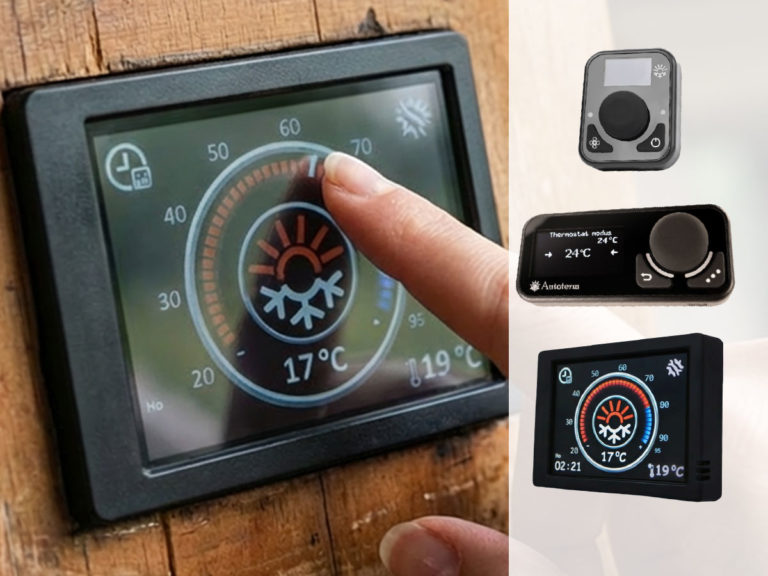
Consider how you want to operate the heater day to day. Simple controls, temperature regulation, timers or an easy-to-read display may matter differently depending on how you travel. The available functions depend on the combination of heater and control panel.
If you regularly stay in the mountains, check suitability for high-altitude operation too. What matters is the specific heater version, any altitude compensation provided and its approved operating range. The description “altitude kit” does not mean that a heater can operate without restrictions at any elevation.
Heater kit or complete installation kit?
A heater kit can make sense if you are replacing an existing unit or putting together a bespoke installation. Compare the exact contents: the control panel, mounting flange, warm-air ducting and outlets are not included in the same way with every package.
Our complete heating installation kits bring together additional components for typical conversions. This makes selection easier, but you still need to check the kit against your vehicle. The installation location, duct lengths, fuel take-off and connection routes depend on your particular conversion.
A kit name such as “99% Camper-Kit” does not replace an assessment of heating demand. What matters is whether its output and equipment suit your vehicle and travel destinations.
Check the installation space before buying
Allow space not only for the heater itself, but also for connections, air ducts or liquid lines, and future maintenance. Fuel supply, combustion air intake and exhaust routing must be achievable in accordance with the installation requirements. Exhaust gases must not be able to enter the occupied space through windows, ventilation openings or the heating-air intake.
Air heaters need a suitable warm-air distribution layout, while hydronic heaters need a properly designed liquid circuit with the necessary components. A good installation delivers heat where you need it and keeps the system accessible.
Use these points to narrow down your choice
- Heating concept: Do you want to heat the interior directly with warm air or build a liquid-based system serving several heating functions?
- Heat demand: How large and well insulated is the conversion, and what temperatures will you travel in?
- Output range: Do both the maximum and minimum heating outputs suit your use?
- Supply: Are the fuel, system voltage and available battery reserves suitable for the heater?
- Features: Which control panel do you need, and is high-altitude operation relevant to your travels?
- Installation and kit contents: Which components are included, what else is required, and where can everything be installed?