Recovery & Digging


Recovery & Digging
A wet field, soft sand or a muddy track: your vehicle can get stuck even without tackling demanding off-road routes. Here you’ll find recovery boards, ropes and straps, plus air and tyre accessories. Choose your equipment to suit your fully loaded vehicle, your planned routes and whether you’re travelling alone or with other vehicles.
Which recovery equipment is right for your vehicle?
A useful recovery kit starts with your travel conditions. Occasional pitches on soft ground call for different equipment from extended trips through sand or remote regions. Also consider which recovery aids you can use independently and which require a second vehicle.
Recovery boards: more traction on soft ground
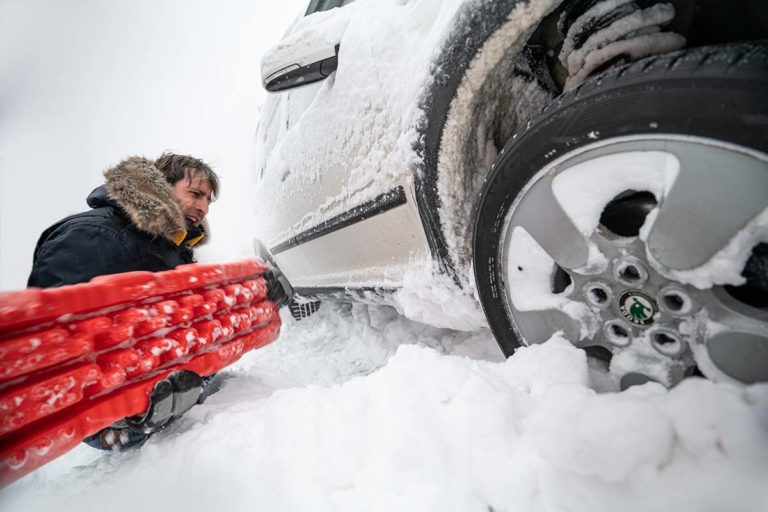
Recovery boards can help tyres regain grip on sand, mud or snow, making them useful for single-vehicle trips too. Our range includes several TRED series and sizes. Compare the dimensions, intended use and operating temperature range of each model.
Compact boards are easier to store, while longer versions provide a longer traction surface to drive onto. Plan how you’ll mount them on your vehicle: the boards need to be securely fastened while driving and accessible when needed. Suitable mounts and fitting hardware are therefore part of the selection process. Only use recovery boards to bridge an unsupported gap if the specific model is expressly approved for that purpose.
Ropes and straps: choose for your recovery method
A kinetic recovery strap stretches under load, storing energy that is then used during recovery. This method requires a suitable second vehicle and equipment designed for kinetic recovery. These straps are not interchangeable with ordinary tow straps or tie-down straps.
Choose the strap according to its recommended vehicle weight range, taking your actual travelling weight, including luggage and equipment, into account. Breaking strength is neither a working load limit nor a direct indication of the appropriate vehicle weight. A higher breaking strength alone does not make a strap the better choice.
The connectors and recovery points on both vehicles must also be suitable for the expected loads. Never use a tow ball as a recovery point. Kinetic recoveries require knowledge and a safe distance for bystanders; familiarise yourself with the equipment and its operating instructions before your trip.
Air and tyres: restoring the correct pressure
A compressor lets you adjust tyre pressures on the road and restore the required road pressure after an off-road section. When choosing one, consider its operating voltage, maximum pressure, airflow and permitted duty cycle. Particularly with large tyres, its performance under pressure matters.
Also check the power connection and the lengths of the cable and air hose: you need to be able to reach every tyre. The appropriate tyre pressure depends on the tyres, wheels, vehicle load, terrain and speed. There is no single off-road pressure that suits every vehicle.
Check your equipment and keep it accessible
Put together a kit whose components work together and remain accessible even when your vehicle is stuck. Regularly inspect straps, connectors, boards and mounts for damage. Practising with your equipment in safe conditions before your trip will help you judge which approach is appropriate and when you need additional assistance.